





“We want it to feel Jewish, but we don’t even know what all the traditions are.” I hear this from couples all the time, and it’s completely normal. So let’s go through what a Jewish wedding actually is, and which parts are the same everywhere and which ones depend on where your family comes from.
The day usually starts before the ceremony with the ketubah signing, your marriage contract, signed in front of two witnesses. Every Jewish community does this, whether your family is Ashkenazi, Sephardic or Mizrahi. The wording can change a little from community to community, but the idea is the same.
Then, at a lot of Ashkenazi weddings, there’s the bedeken. The groom veils the bride right before the ceremony. It comes from the story of Jacob, who married the wrong sister because she was hidden under a veil. So the groom looks first and then veils her, and he knows exactly who he’s marrying.
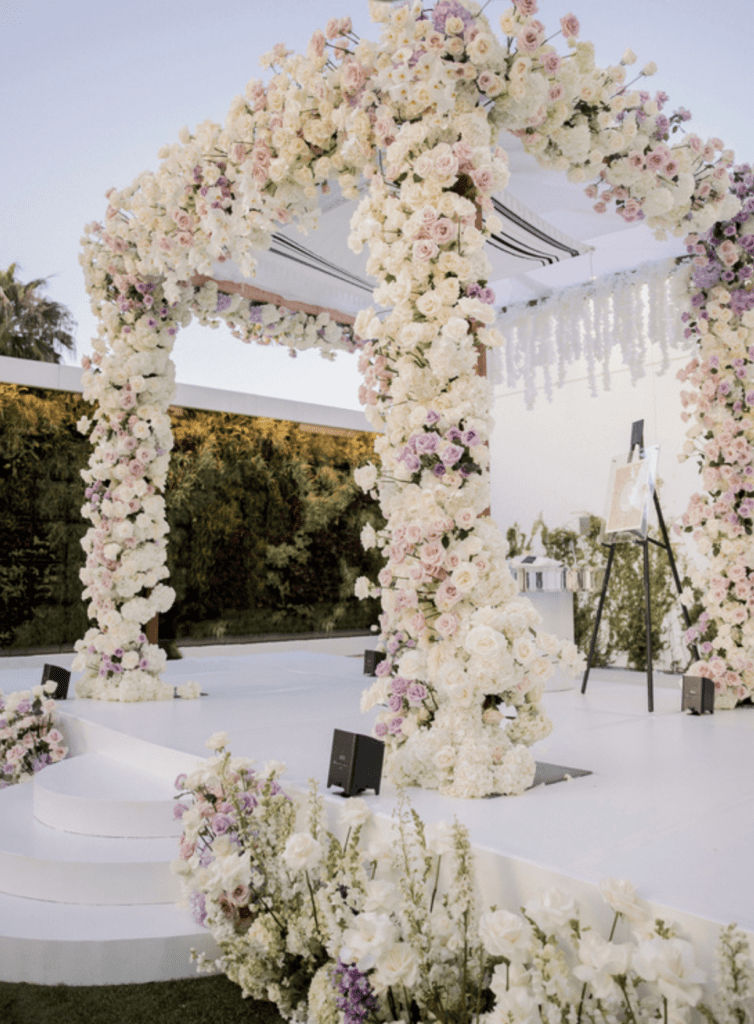
After that comes the ceremony under the chuppah: the blessings, the ring, the ketubah read out loud, the seven blessings and the glass. I wrote a whole post about what actually happens under the chuppah, because it deserves its own.
You don’t need every tradition to have a Jewish wedding. Pick the ones that mean something to you, and know why you’re doing them.
And that’s what I tell every couple. You do not need to do every single tradition for your wedding to be Jewish. You also don’t have to pick one style if your families come from different backgrounds. Some of my families are Orthodox Ashkenazi, with a mechitza on the dance floor and a fully kosher production. Others are Sephardic or Persian, with completely different music, different dancing and a henna night that’s a whole celebration of its own. Both are right, and so is everything in between.
The weddings that feel the most powerful are never the ones with the most traditions. They’re the ones where every tradition actually means something to the two people standing under that chuppah.
BTW, WHO’S PLANNING YOUR EVENT? #THEVENTBAR
