



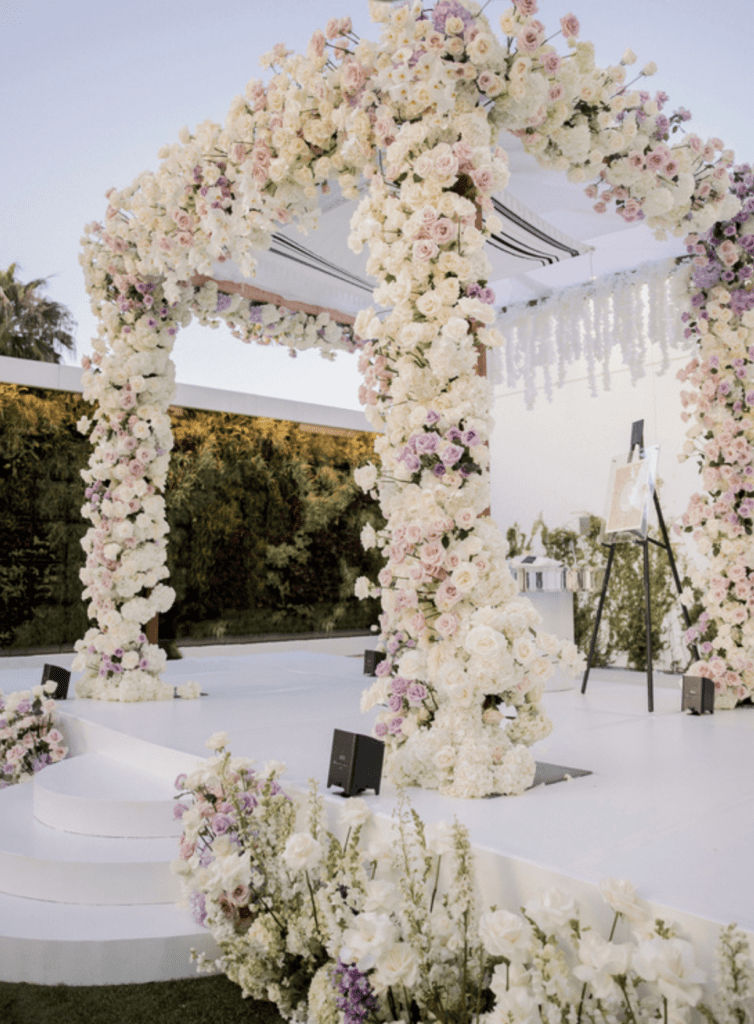
Here’s something nobody tells you about Jewish weddings. The most important part of the whole day is the part people pay the least attention to: what actually happens under the chuppah.
Think about it. Couples spend months planning, hundreds of hours on the venue, the flowers, the menu, the seating chart and the band. Then they get to the chuppah, which is literally the reason everyone is there, and half the room is on their phones. Some people are whispering, and some are already thinking about cocktail hour. During the ceremony I’m usually standing at the back of the aisle, across from the couple, or I’m already in the ballroom making sure everything is perfect before the ceremony ends and the guests walk in. From the back of that aisle, I see all of it.
And it’s so emotional to watch. I know what it took for this couple to get there: the journey, the families, the decisions, the back and forth over the guest list. And now here they are, finally becoming one. It’s the moment that counts, and people miss it.
So in case you’re one of the people on your phone, here’s what you’re missing. Most of the weddings I do are Sephardic and Persian, so I don’t see a lot of brides circling the groom seven times. But in case you ever wanted to know why an Ashkenazi bride does it, here’s why. It comes from a verse in Jeremiah, “a woman shall surround a man.” Seven echoes the seven days of creation, since the couple is building a new world together. Many people also see it as the bride building a wall around their new home, the way Joshua circled Jericho seven times. Some brides circle three times instead, for the three times God says “I will betroth you” in the book of Hosea. Then the rabbi says the blessings over the first cup of wine and the couple drinks. Next comes the ring. The groom puts it on the bride’s finger and says the words that marry them in front of two witnesses, and that’s the moment they’re married. The ketubah gets read out loud.
You spend a year planning a wedding. The moment that actually counts happens in a few minutes under the chuppah.
Then the rabbi says the Sheva Brachot, the seven blessings, over a second cup of wine. A lot of people have heard them a hundred times and still don’t know what they are, so here they are in short. Borei Pri HaGafen blesses the wine. Shehakol Bara Lichvodo says everything was created for God’s glory. Yotzer HaAdam thanks God for creating people. Asher Yatzar et HaAdam B’tzalmo thanks God for creating people in His image and making them partners who can build a life together. Sos Tasis prays for Jerusalem to rejoice when her children come home. Sameach Tesamach asks God to bring the couple the same joy He gave the first couple in the Garden of Eden. Asher Bara Sason V’Simcha is the big one. It celebrates joy, love, friendship and peace, and prays that the voices of brides and grooms will be heard in the streets of Jerusalem. At a lot of Sephardic weddings, a tallit goes over the couple during the blessings. Then the glass breaks and everyone screams Mazel Tov.
So guests, please put the phone down. Your pictures from row twelve are not going to be better than the photographer’s, I promise. Just watch their faces. That’s the whole reason you were invited. And couples, a few reminders from me. Face the crowd. Do not give your guests your backs, because you want beautiful pictures of your faces, not your butts. Make sure someone takes the bouquet from the bride when she gets to the chuppah. Everyone forgets, and she should have her hands free to hold her groom’s hand. And when that glass breaks, take one second before you walk back down the aisle. You just got married, so be there for it.
BTW, WHO’S PLANNING YOUR EVENT? #THEVENTBAR
